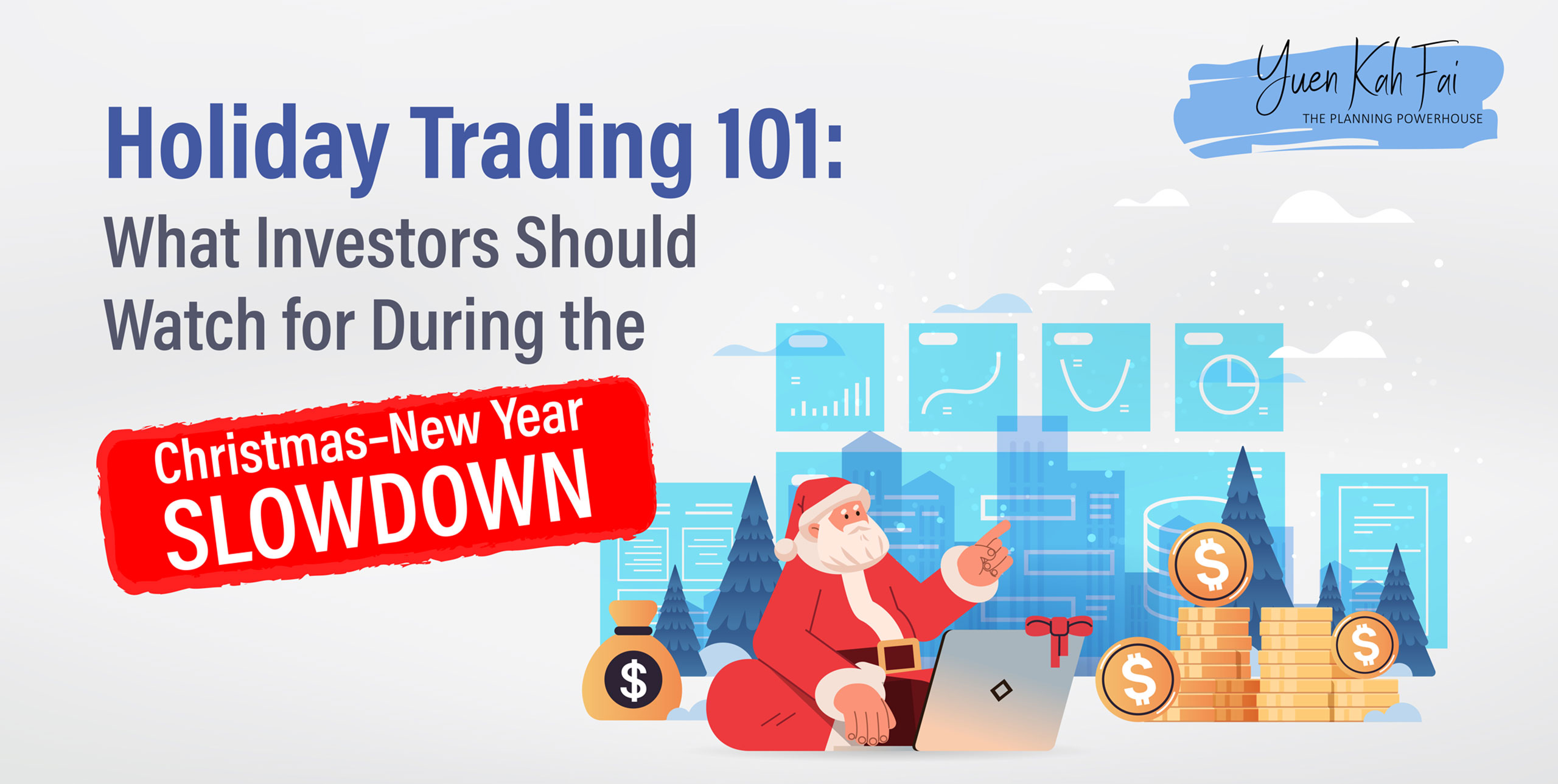
As the Christmas and New Year period approaches, global markets naturally enter a quieter phase. Trading remains open, but activity slows as institutional investors, traders and liquidity providers go on holiday. This slowdown is highly predictable each year and affects liquidity, spreads and the ease of executing trades. Understanding these patterns helps you avoid unnecessary costs during one of the calmest stretches of the financial calendar.
Why Liquidity Drops During the Holidays
Historical data shows a clear and consistent decline in trading activity from late December through early January. When fewer market participants are active, liquidity shrinks and spreads widen. For example, global equity markets often trade at only 45 to 70% of normal volume between 23 December and 1 January. Currency markets tend to fall by 30 to 50% in the second half of December. In fixed income, US bond markets typically experience a decline of about 20%, while European markets see a drop of 20 to 40% and Asia can fall by as much as 50%.
Derivatives exhibit similar patterns, with global futures and options volumes roughly 40% below normal in late December. These numbers show why execution may take longer or carry a slightly higher cost during the season.
The slowdown begins earlier than most expect. Thanksgiving week in the United States often sets the tone globally because the US represents a significant share of global equity activity. The day before Thanksgiving typically sees around 80% of normal equity volume, and the half-day after Thanksgiving drops sharply to about 45%. Even international markets, which do not observe Thanksgiving, tend to run 10 to 25% below average during this period.
This year includes the MSCI semi-annual index rebalance on 25 November, which temporarily boosts trading activity. However, once the rebalance is completed, markets revert quickly to the seasonal slowdown.
The Mid-December Fade
By mid-December, the slowdown becomes unmistakable. Trading desks begin to reduce risk as the year-end approaches, and liquidity providers cut back inventory. This is also when foreign exchange markets thin out more dramatically, followed by credit markets and equities. With fewer market makers active, spreads widen, and even routine trades may experience delays. Investors should expect the depth in these markets to be lower than usual during the second half of the month.
The stretch between 23 December and 1 January is consistently the slowest period in global markets. Multiple regional holidays overlap, including Christmas Eve, Christmas Day, Boxing Day and New Year’s. During this time, volumes in many markets run at roughly half of normal levels. Derivatives, credit products and futures markets experience similar declines. This is the week when most investors choose to postpone major trades and wait for the first full week of January, when market depth recovers.
How Investors Can Navigate the Season
- Plan trades ahead of the holiday slowdown Complete major reallocations before mid-December or wait until early January when liquidity returns.
- Use limit orders and expect slower execution Thinner markets mean trades take longer. Limit orders help control price and avoid unnecessary costs.
- Coordinate across markets and time zones Holiday closures vary by region, and overlapping breaks can affect cross-asset transactions.
- Prepare for wider spreads and reduced depth Factor in higher transaction costs and less available liquidity when planning orders.
- Work with experienced trading desks They can optimise timing, source liquidity and route orders strategically during thin market conditions.
- Timing is everything Investors who plan early are best positioned to navigate the year-end period smoothly. If trading during the holiday stretch is unavoidable, proper coordination with a skilled trading desk helps minimise market impact and maintain execution quality.
The holiday slowdown is not a sign of instability. It is a predictable annual pattern based on reduced participation. Markets return to normal levels of liquidity quickly once the new year begins and trading desks resume full operations. By understanding these seasonal trends and planning accordingly, investors can protect performance, reduce execution costs and enter the new year in a stronger position.
Stay ahead of the markets this holiday season. Speak with me today to review your strategy.
Disclaimer: Investment carries certain risks. You should not just rely on results as an indication of your financial needs. You should understand and familiarise yourself with any investment and the associated risks before investing. You are also recommended to seek professional advice before making any decision to buy, sell or hold any investment or insurance product. The views and thoughts expressed in the post belong solely to us, and not to Manulife Financial Advisers Pte Ltd, or any other group of individuals.
Exclusive Content
Be Part of Our Exclusive Community
Subscribe to our newsletter to get the latest updates of our news and events.