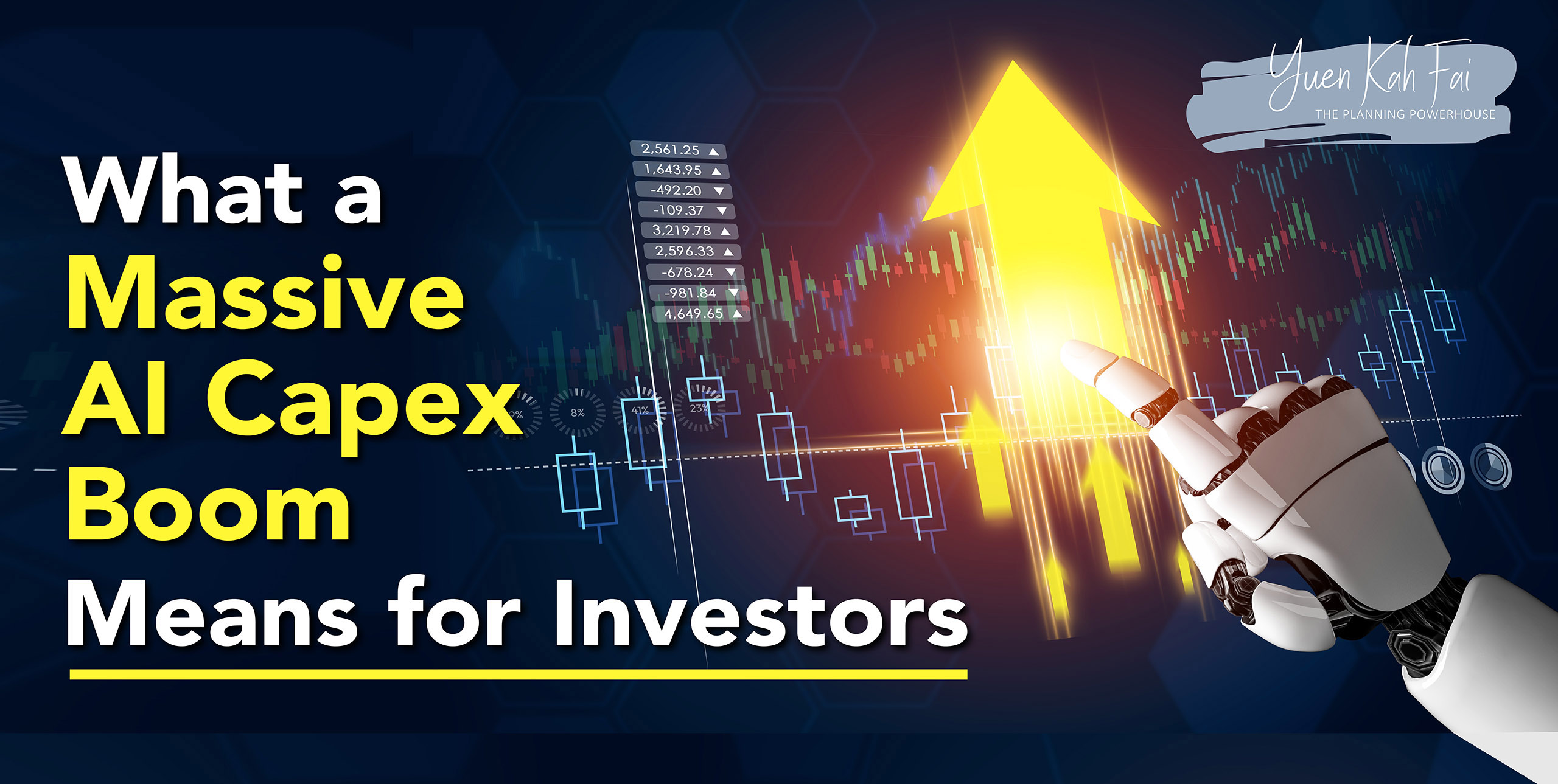
Artificial intelligence is no longer just a technology trend; it’s becoming one of the largest capital investment cycles in modern history.
According to an analysis by Bridgewater Associates, major technology companies are expected to collectively spend around $650 billion on AI infrastructure in 2026, a sharp increase from about $410 billion in 2025. The spending surge is being driven by leading tech giants such as Alphabet, Amazon, Meta, and Microsoft — all racing to expand data centres, computing power, and AI capabilities to meet growing demand.
But what does this massive wave of capital expenditure (capex) actually mean for investors?
The AI Infrastructure Arms Race
Demand for AI computing power is growing faster than supply. From large language models to advanced enterprise applications, the appetite for computing resources continues to surge. As a result, hyperscalers are pouring unprecedented amounts of capital into building infrastructure, everything from AI chips to massive data centres.
This marks a fundamental shift in how growth is funded in big tech.
Historically, many large technology companies generated strong cash flows and returned capital to shareholders through share buybacks and dividends. Now, some of that capital is being redirected toward AI infrastructure instead. According to Bridgewater’s analysis, several tech companies have already reduced share buybacks to help finance their AI expansion.
For investors, this changes the earnings narrative. Instead of maximising near-term profitability, companies are prioritising long-term platform dominance.
A New Risk–Reward Profile
The scale of AI spending introduces both opportunity and risk.
On one hand, companies that successfully lead the AI race could unlock enormous new revenue streams across cloud services, enterprise software, automation, and consumer applications.
On the other hand, the level of spending is unprecedented. Bridgewater’s co-chief investment officer, Greg Jensen, describes the current phase of the AI boom as potentially “more dangerous,” largely because companies are committing huge sums of capital before the full commercial returns are proven.
There is also a ripple effect across other sectors. AI innovation could disrupt software providers and data companies, particularly those whose products may become automated or replaced by AI-driven platforms.
In addition, such massive investment cycles can have macroeconomic consequences. Bridgewater estimates that technology investment contributed roughly 0.5 percentage points to U.S. GDP growth in 2025 and could contribute around 1 percentage point in 2026. At the same time, rising demand for computing equipment and electricity could put pressure on prices in certain sectors.
A Familiar Pattern in Tech Cycles
Large investment waves are not new in the technology sector. The early internet era saw similar surges in capital spending during the late 1990s before the Dot-com Bubble burst.
However, today’s AI investment environment is still far from that level of speculative excess. The current spending boom is largely driven by profitable, cash-rich companies with global platforms and established revenue models.
Still, investors should pay close attention to how companies balance innovation spending, capital efficiency, and long-term returns.
The Bottom Line for Investors
AI is rapidly reshaping not just technology, but also how markets value growth, capital allocation, and future earnings potential.
For investors, the key question is no longer whether AI will transform industries. The real question is which companies will turn massive investment into sustainable profitability. Understanding these shifts can help investors navigate opportunities while managing risks in this evolving landscape.
If you’re reviewing your portfolio or want to understand how emerging technology trends could impact your financial strategy, reach out now. A thoughtful plan today can help you stay prepared for tomorrow’s market shifts.
Disclaimer: Investment carries certain risks. You should not just rely on results as an indication of your financial needs. You should understand and familiarise yourself with any investment and the associated risks before investing. You are also recommended to seek professional advice before making any decision to buy, sell, or hold any investment or insurance product. The views and thoughts expressed in the post belong solely to us and not to Manulife Financial Advisers Pte Ltd. or any other group of individuals.
Exclusive Content
Be Part of Our Exclusive Community
Subscribe to our newsletter to get the latest updates of our news and events.