When most people think about artificial intelligence today, they think of ChatGPT or image generation tools. These applications have captured public attention and introduced AI to millions of users worldwide.
However, recent comments from NVIDIA CEO Jensen Huang suggest that something much larger may be unfolding beneath the surface. Rather than simply creating smarter software, AI may be driving a fundamental rebuilding of global computing infrastructure.
The Shift From Generative AI to Inference
The first wave of AI was largely driven by generative AI, such as chatbots, coding assistants, content creation tools, and image generators. This was the phase that demonstrated AI’s capabilities and created excitement across industries.
Today, the focus is increasingly shifting toward inference. While AI models are trained periodically, inference happens continuously whenever an AI system performs a task. Every time an AI assistant answers a question, software automates a workflow, or a digital agent makes a decision, computing resources are consumed.
This is why Jensen Huang has repeatedly emphasised that “compute is now revenue.” The more AI is used, the greater the demand for computing power.
The Three Waves of AI Growth
The current AI boom may be only the first stage of a much larger transformation.
Wave 1: AI Infrastructure
Hyperscalers such as Amazon Web Services, Microsoft Azure, and Google are investing heavily in AI data centres and infrastructure. This is the AI buildout that most investors are focused on today.
Wave 2: Enterprise and Agentic AI
AI is beginning to move beyond answering questions. Businesses are increasingly exploring AI agents that can execute workflows, assist employees, coordinate software systems, and automate repetitive tasks. This is where significant productivity gains may emerge.
Wave 3: Physical AI
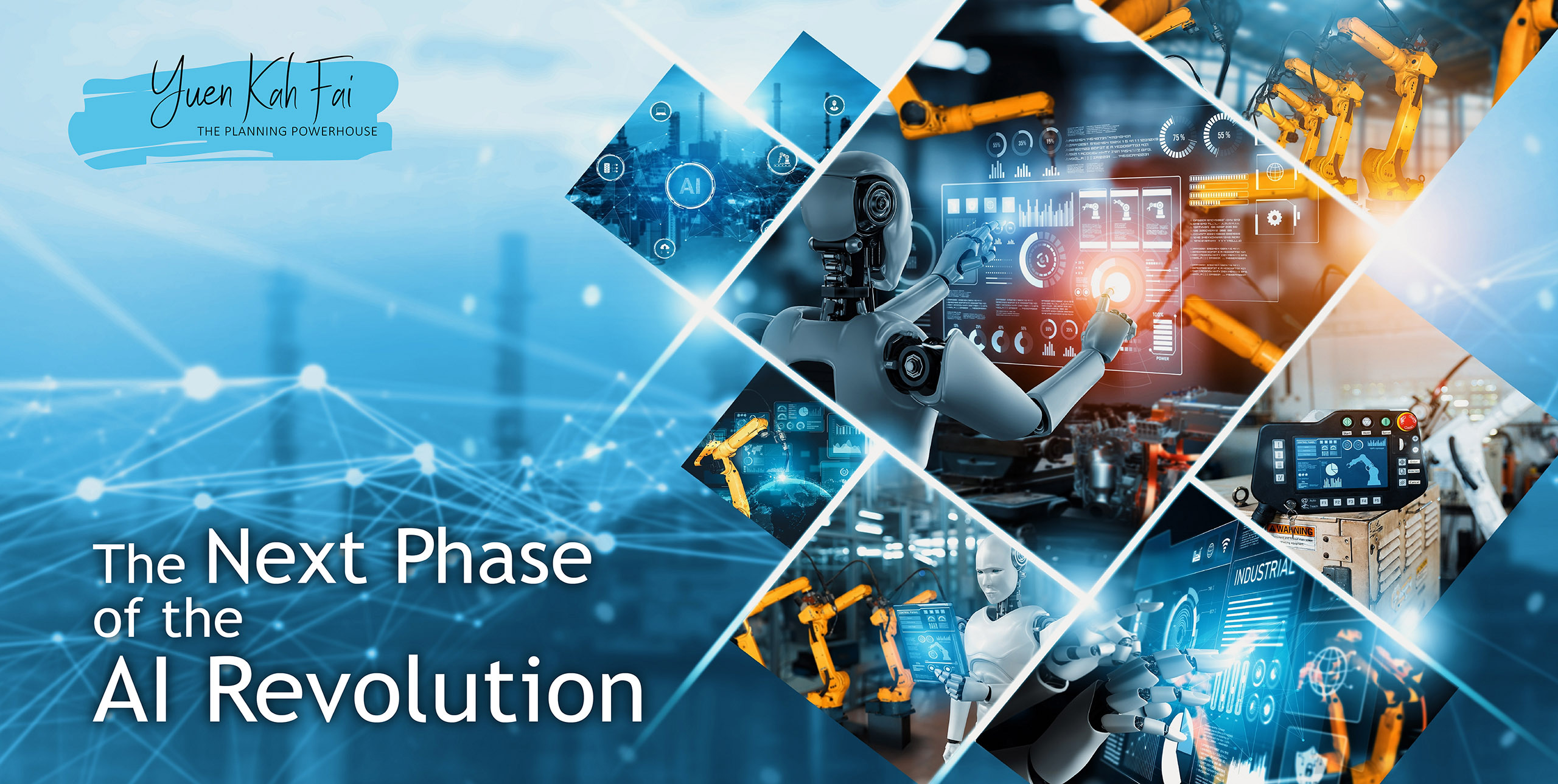
The next frontier is AI in the physical world. Robotics, factories, logistics networks, autonomous systems, and industrial automation could become major beneficiaries as AI expands beyond digital environments.
A New Computing Architecture
In the past, humans used computers. In the future, humans, and potentially billions of AI agents, may continuously use computing infrastructure alongside them.
This helps explain why NVIDIA increasingly positions itself as a full-stack AI infrastructure company, spanning GPUs, CPUs, networking, simulation tools, robotics frameworks, and AI factories.
While risks such as competition, overinvestment, and technological disruption remain, AI increasingly appears less like a short-term technology trend and more like the foundation of a new computing architecture that could reshape industries and economies over the coming decade.
Let’s Connect!
As with any major technological shift, the opportunities are exciting, but so are the risks. If you’d like to discuss how emerging trends fit into your financial strategy, let’s connect.
Disclaimer: Investment carries certain risks. You should not just rely on results as an indication of your financial needs. You should understand and familiarise yourself with any investment and the associated risks before investing. You are also recommended to seek professional advice before making any decision to buy, sell, or hold any investment or insurance product. The views and thoughts expressed in the post belong solely to us and not to Manulife Financial Advisers Pte Ltd. or any other group of individuals.
Exclusive Content
Be Part of Our Exclusive Community
Subscribe to our newsletter to get the latest updates of our news and events.